Permits and rules
How does Richmond Hill's tree preservation by-law affect a teardown?
Planning guidance from TrueNorth Demolition. Project conditions and current authority requirements should be confirmed before work.
- tree by-law
- teardown
- Richmond Hill
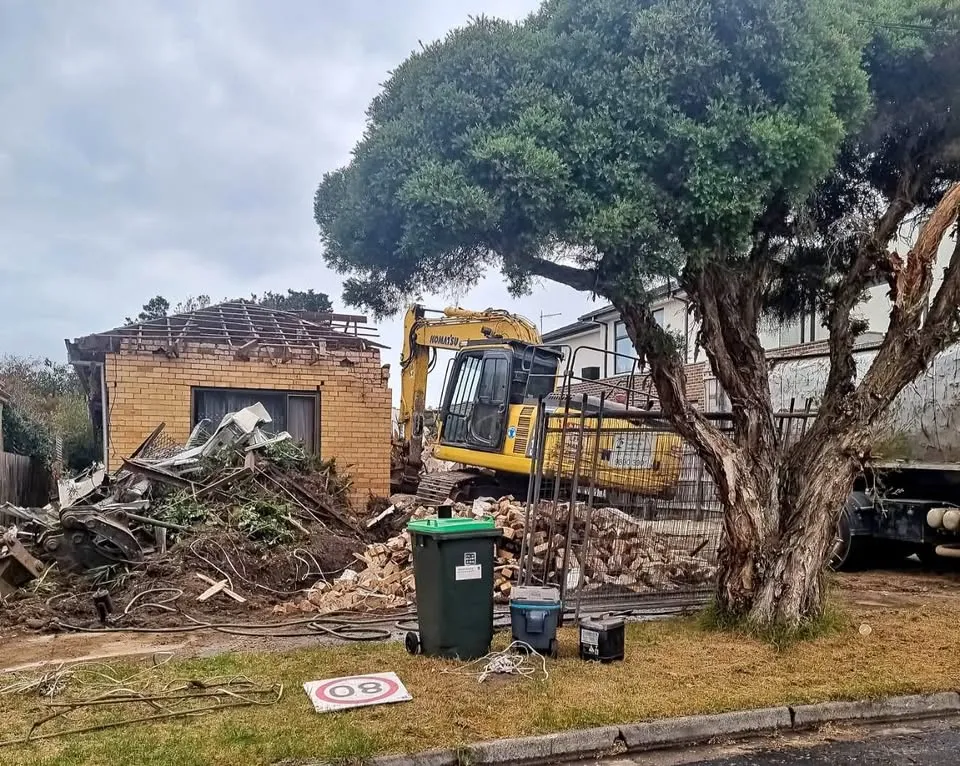
Richmond Hill's tree preservation by-law protects trees above a set size on private property, so removing or damaging one during a teardown needs a City permit. Trees you keep must be protected with hoarding for the length of the job.
How much this affects your project depends on how many trees you have, where they sit relative to the house and whether your new build needs any of them removed. It is worth sorting out before demolition day, not during it.
Which trees are protected
The by-law applies to trees on private property above a trunk size set by the City, measured at a standard height above the ground. The threshold and any exemptions can change, so check the current version on the City's website or ask the City's urban forestry staff. Trees on the City boulevard in front of your house belong to the City and are protected separately. Trees on a neighbour's lot, or on the property line, need the neighbour's involvement too.
Removing a protected tree
If a protected tree sits where the new house or driveway will go, you apply to the City for a tree permit. The City usually asks for an arborist report describing each tree, its condition and why removal is needed. Approval can come with conditions such as replacement planting. Many builders apply for tree permits at the same time as the demolition and building permits, so everything lines up.
Protecting the trees you keep
Trees that stay need tree protection hoarding, usually a sturdy fence, set at a distance from the trunk that the City or your arborist specifies. Inside that zone there is no digging, no parking of machines and no stockpiling of debris. For a teardown, that affects:
- Where the excavator can sit and swing
- The route trucks take onto and off the lot
- Where bins and debris piles can go
- How the foundation is removed near roots
Timing and inspections
The City may want to inspect the hoarding before demolition starts, and the fence stays up until the builder is finished with heavy work nearby. Plan for this in your schedule. Pulling the hoarding early to make access easier can lead to fines and a stop to the work.
Talking to your neighbours about trees
Roots and canopies do not stop at the property line. If a neighbour's tree hangs over your lot or its roots reach toward the foundation you are removing, that tree may need protection as well. Talk to your neighbour early, share the arborist's plan and agree on where hoarding will go. It avoids disputes and keeps the City's conditions easy to meet.
What this business does about it
At the site visit we look at every tree near the house and plan machine access around protected root zones. Our operators work inside the approved area, and debris never goes behind the hoarding. We coordinate with your arborist when their report sets specific conditions. This planning is part of every residential demolition and site clearing job we take on. If you have a teardown coming up, ask for a free estimate and we will walk the lot with you.
Frequently asked questions
- Do I need an arborist report?
- Usually, if you want to remove a protected tree or work close to one. The City uses the report to decide on a permit and to set protection conditions.
- Can a tree be removed if it is dead or dangerous?
- The by-law has provisions for hazardous and dead trees, but you should still contact the City before removing one so there is a record.
- What happens if a protected tree is damaged?
- The City can issue fines and require replacement planting. That is why hoarding and machine planning matter so much.
- Does the by-law apply to small trees and shrubs?
- Only trees above the size set in the by-law are protected. Smaller trees and shrubs can usually be removed, although your builder or landscaper may want to keep them.
Confirm requirements for your property
Permit, utility and hazardous-material questions need project-specific review. Use these official starting points and discuss the scope with qualified professionals.
- Richmond Hill building and demolition permits
- Ontario: owner responsibilities and designated substances
- Ontario: asbestos in the workplace