
Outdoor projects
What is involved in removing an inground pool in Richmond Hill?
Planning guidance from TrueNorth Demolition. Project conditions and current authority requirements should be confirmed before work.
- pool removal
- backyard
- Richmond Hill
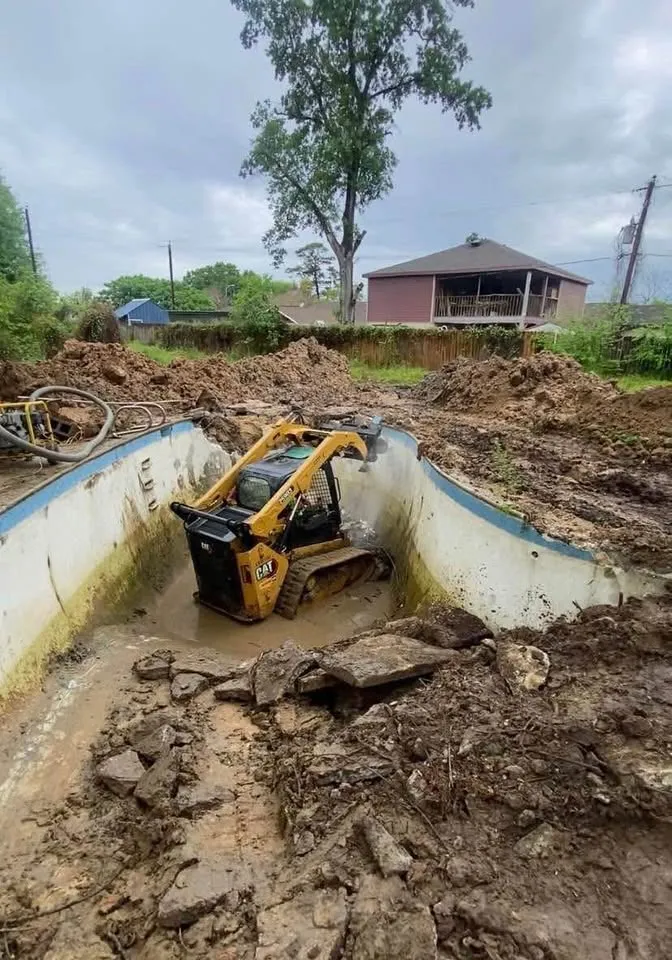
Removing an inground pool means draining it properly, disconnecting its power and gas, breaking out the shell and filling the hole with compacted material. In Richmond Hill you also need to keep the pool enclosure in place until the pool is no longer a hazard.
The biggest choice is full or partial removal, and it depends on what you want to do with that part of the yard later.
Draining the pool
Confirm the water type and permitted discharge route before pumping. Richmond Hill's pool-draining guidance distinguishes chlorine-treated water from saltwater. Saltwater must not enter a storm sewer, and waiting for chlorine to drop does not make that route suitable. Plan the appropriate treatment and destination with the responsible contractor.
Disconnecting equipment
The pump, filter, heater and lights all need to be made safe before any demolition:
- A licensed electrician disconnects power to pumps and lights
- A licensed gas fitter caps any gas line to a heater
- Utility locates are booked through Ontario One Call before digging
Full or partial removal
Full removal takes out the entire shell, coping and deck concrete and replaces them with clean fill compacted in layers. Future construction still needs the designer or engineer?s review of the actual ground and project records; full removal alone does not approve building on the area. Partial removal breaks the floor so water can drain, removes the top part of the walls and fills the rest. It involves less hauling but can limit what you build there later. Vinyl-lined and fibreglass pools have their own steps, and the liner or shell is removed in either case.
Access, fill and grading
Getting machines into an established backyard is often the hardest part. The route may run through a side yard or a temporary fence opening, with ground protection mats over the lawn. Fill is placed in layers and compacted to reduce settling, then topped with soil ready for sod or planting. Keep the enclosure or a temporary barrier up until the hole is filled, because Richmond Hill's pool enclosure rules apply while the pool can hold water.
How long the yard takes to recover
Once the fill and topsoil are in, most owners lay sod or seed straight away. Some settling can show up over the first season, especially after heavy rain or the spring thaw, and a little topsoil added at that point usually levels things out. If you are planning a patio or hardscape on top, your landscaper may prefer to wait until the fill has had time to settle.
What this business does about it
We plan the draining, disconnects and access at the site visit, explain full and partial removal for your yard, and write the method you choose into the scope. Our crew breaks out the pool, places and compacts fill and leaves the area ready for your landscaper. See our pool removal page for photos, or combine the job with outdoor structure removal and concrete removal for the surrounding deck. Request a free estimate to book a visit.
Frequently asked questions
- Do I need a permit to remove my pool?
- Check with the City of Richmond Hill before starting. Grading, drainage and enclosure rules can all apply, and the City can confirm what your lot needs.
- Can I build on top of a removed pool?
- The designer or engineer must assess the intended structure, actual ground and available removal and fill records. Neither a full removal nor a level lawn establishes approval to build; retained buried portions are another condition to review.
- What happens to the concrete deck around the pool?
- It is usually broken out and hauled with the pool, or kept if you want to reuse it as a patio.
- When can I take down my pool fence?
- Keep the enclosure, or a temporary barrier, until the pool is filled and can no longer hold water.
Confirm requirements for your property
Permit, utility and hazardous-material questions need project-specific review. Use these official starting points and discuss the scope with qualified professionals.
- Richmond Hill building and demolition permits
- Ontario: owner responsibilities and designated substances
- Ontario: asbestos in the workplace
Keep construction evidence with the future-use decision
| Available information | What it helps explain | What it does not establish |
|---|---|---|
| Old pool plans | Recorded layout | Current buried condition |
| Removal scope and photographs | Work documented at the time | Suitability for a future foundation |
| Fill and inspection records | Evidence for the receiving professional to review | Automatic approval of every later use |
The designer or engineer must assess the intended new structure and actual ground information. Neither full removal nor a finished lawn guarantees buildability. Do not choose a fill or drainage method from this comparison.